Most safety professionals already work as business partners, with or without the name in their job title. We think that business partnering is a great way to think about how safety professionals can work with AI tools. Not as tools to be deployed, but as a partner to work alongside. And like any working relationship, what you get out of it depends on being clear about what you're asking for.
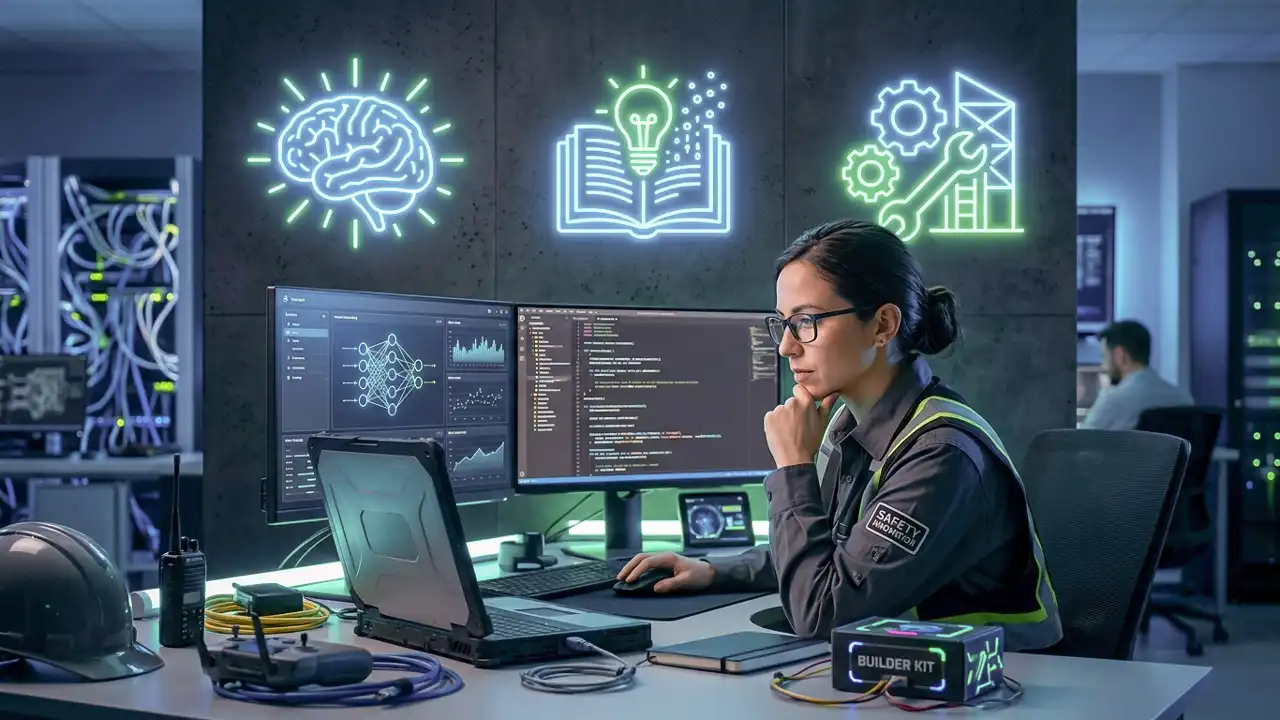
At PKG, we describe three modes of partnering with AI: thinking, learning, and building. We call it the Safety AI Business Partner Framework. The value isn't just in knowing the three modes exist. It's in being conscious about which one you're in and how they relate to each other to provide the best value.
Thinking Partner
This is AI partnering for the early, uncertain work, the kind where you don't yet know the answer, or even the right question.
You're preparing for a critical risk workshop, and you want to pressure-test your facilitation approach. You're heading into a difficult conversation with a contractor about audit findings, and you work through the dynamics first. Your manager wants a three-year strategy for rationalising critical controls, and you're not sure where to begin, so you use AI to structure your thinking and challenge your own assumptions.
In Thinking Partner mode, you're not asking for an output. You're asking for better thinking.
Learning Partner
This is AI for consolidating understanding before you act.
A new regulation on the safety aspects of digital work systems has been published, so rather than wading through two hundred pages of legislation, you extract the requirements and map them against your current programs. You need to get across psychosocial risk, a new hazard or an unfamiliar standard, fast enough to have an informed conversation with the specialist who lives in that detail every day. You want to understand not just what the contract or procedure says, but what it's trying to achieve.
In Learning Partner mode, you're closing a knowledge gap.
Building Partner
This is AI for making things. Drafts, deliverables, prototypes and communications.
You need a fit-for-purpose contractor orientation, so you co-create a scenario-based module and iterate through three versions in an afternoon. You're producing a community information pack for a major hazard facility, a safety alert, an investigation timeline, and a policy brief. AI generates the first draft. You refine it with professional judgement.
In Building Partner mode, you're producing something tangible.
Knowing which mode you're in
The framework is simple on purpose. Thinking, learning, building. Three ways to partner, each suited to a different kind of work.
The skill is being intentional about which one you're in. When you engage with generative AI without being clear on what you're after, you tend to get a confident output when what you really needed was a better question, or a quick draft when what you needed was to understand the problem first. The mode you choose shapes what you get back.
So before you start the conversation with your AI tools, consider your AI partnering mode. Are you here to think, to learn, or to build? That moment of intention is what turns AI from a tool you use into a partner you work with.
We coach safety teams through this framework at the Safety Innovation Academy. If you'd like to build the habit across your team, start with a conversation.