For most of the last century, we leaned on IQ as a shorthand for cognitive capability. A single number scoring reasoning, problem-solving and mental performance. Anyone who has spent time in a control room, on a scaffold, or in an incident review knows how little that number really explains.
That is part of why EQ entered the conversation. Emotional intelligence gave us language for the human capabilities that shape how people lead, communicate, collaborate and respond under pressure. Self-awareness, empathy, regulation, social judgement.
Safety has always sat at the meeting point of the technical and the human. Technical knowledge helps, but effective safety practice depends on judgement, trust, influence, context, and a deep understanding of how work is done in changing conditions.
We are now moving into another capability shift, and this one is arriving fast.
AI at work
Artificial intelligence is working its way into everyday practice. Safety professionals are increasingly surrounded by data, automation, large language models, AI-enabled platforms and decision-support tools. AI now shapes how people search for information, summarise documents, analyse incidents, draft communications, spot patterns and make sense of complex systems.
For a while, a novel and interesting question was whether you had tried using AI tools. That question has already dated. Now the novel and interesting questions are whether you are ready to use AI well and whether your organisation is supporting your quest.
Readiness is a different thing from exposure. It is the distance between having a tool open on your screen and knowing when to trust it, when to question it, and when to set it aside.
Introducing the SafetyAIQ
SafetyAIQ™ stands for Safety Artificial Intelligence Quotient. It is a self-assessment built by our team at Pocketknife Group® to help safety professionals and their organisations understand how ready they are to use AI responsibly and effectively in health and safety work.
Part of that readiness sits with the individual. A safety professional needs enough literacy, confidence and practical skill to know when AI is useful, when it is risky, and how to work with AI-generated output without handing over professional accountability for the result.
Individual capability is only half the story
The other half belongs to the organisation.
Someone can be curious, capable and already experimenting, and still be held back by unclear rules, limited access to approved tools, poor data quality, blocked platforms or mixed messages from leadership. In those conditions, AI use does not stop. It has the potential to move into the shadows, happening informally and inconsistently, without the support needed to manage the risk.
The reverse happens just as often. An organisation invests in enterprise AI tools and transformation programmes while many of its people remain unsure about what is approved, what is safe, and how any of it fits real safety work.
SafetyAIQ assesses both at once: your own capability, and your organisation’s readiness to support it.
The gap is the insight for action
The most useful signal is the distance between them the individual and organisational SafetyAIQ scores.
When a capable individual sits well ahead of an unprepared organisation, you get the frustrated pioneer: someone doing good work in the shadows, possibly a flight risk, sometimes carrying unseen exposure on the organisation’s behalf. When organisational ambition runs ahead of individual capability, the investment struggles to translate into anything practical or sustainable. And when people and organisations are both experimenting without clear boundaries, energy quickly outpaces governance.
Naming that gap changes the conversation and moves a team from a vague sense that they should be doing more with AI to a specific view of whether their people are being enabled, constrained, encouraged, or left to fend for themselves. It also provides clarity that readiness is never created by access to a tool alone. It depends on the conditions around the tools, including leadership, training, governance, trust, data quality, and the confidence people have to use AI responsibly.
Opportunity and risk in the same tool
AI is not simply another piece of software. It changes how people interact with information and how quickly a summary, an analysis or a recommendation can appear. It shifts the relationship between professional judgement and machine-generated output.
For safety professionals, that cuts both ways. Used well, AI can ease administrative load, sharpen communication, support better learning from events, and make large volumes of information manageable. Used poorly, it can manufacture false confidence, amplify weak data, and produce plausible answers that happen to be wrong.
This is why organisational support carries so much weight.
Better work with AI
SafetyAIQ is built to support the conversation about AI in safety, moving from curiosity to capability, from isolated experiments to responsible use, and from general AI enthusiasm to genuine improvement in safety practice. It keeps professional judgement and human skills at the centre, and treats AI as something to be understood and directed, with clear boundaries around data, privacy and human oversight.
IQ helped us understand cognitive capability. EQ broadened that to emotional and social capability. SafetyAIQ helps us understand AI readiness for modern safety practice.
As AI becomes more embedded in how work is designed, managed and improved, safety professionals will need more than access to new tools. They will need capability, judgement, and the right conditions around them. That is the foundation of Better Work, By Design™, and it is the conversation SafetyAIQ is built to support.
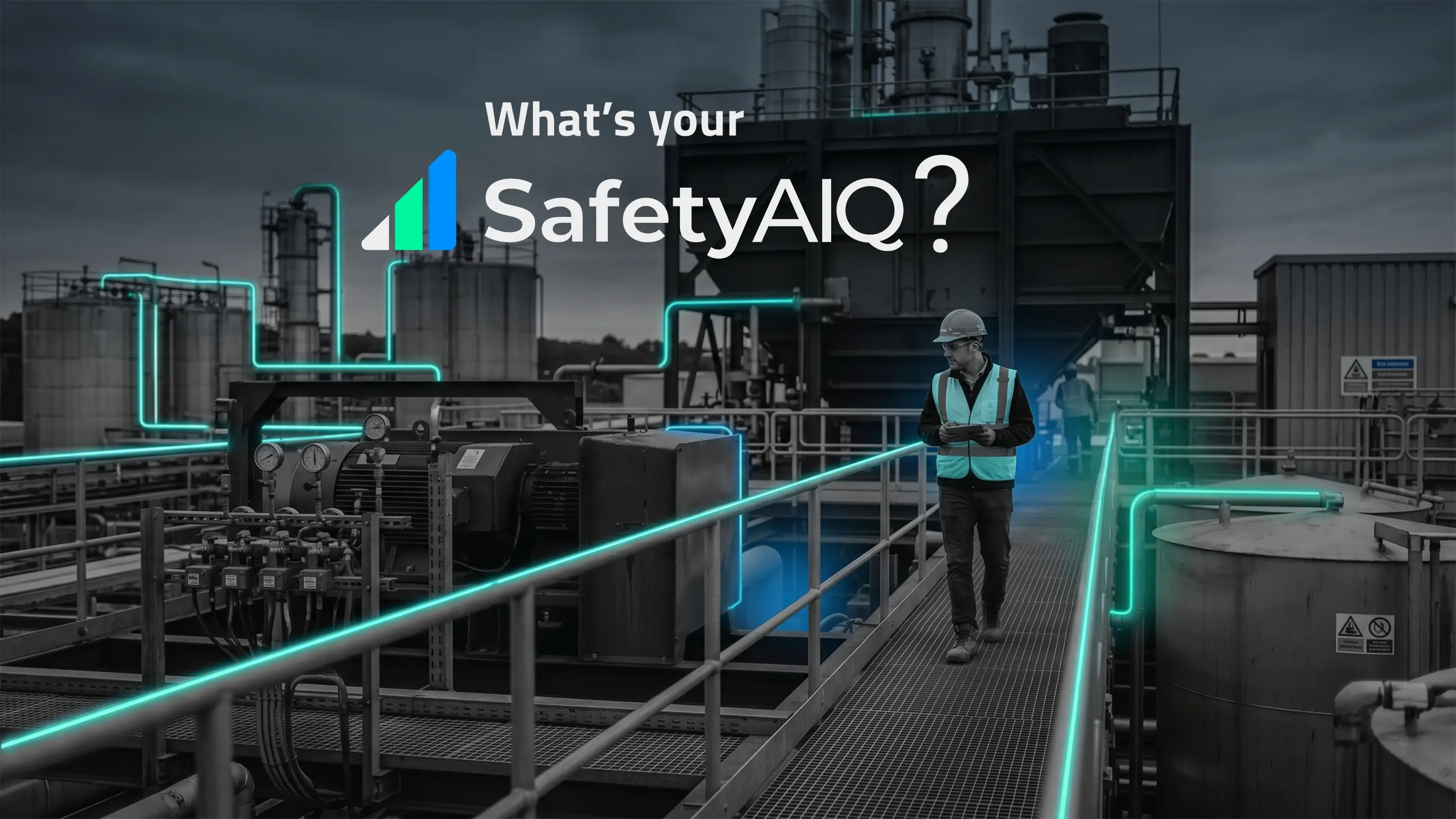
What’s your SafetyAIQ?
See where you and your organisation sit. Take the SafetyAIQ self-assessment.