
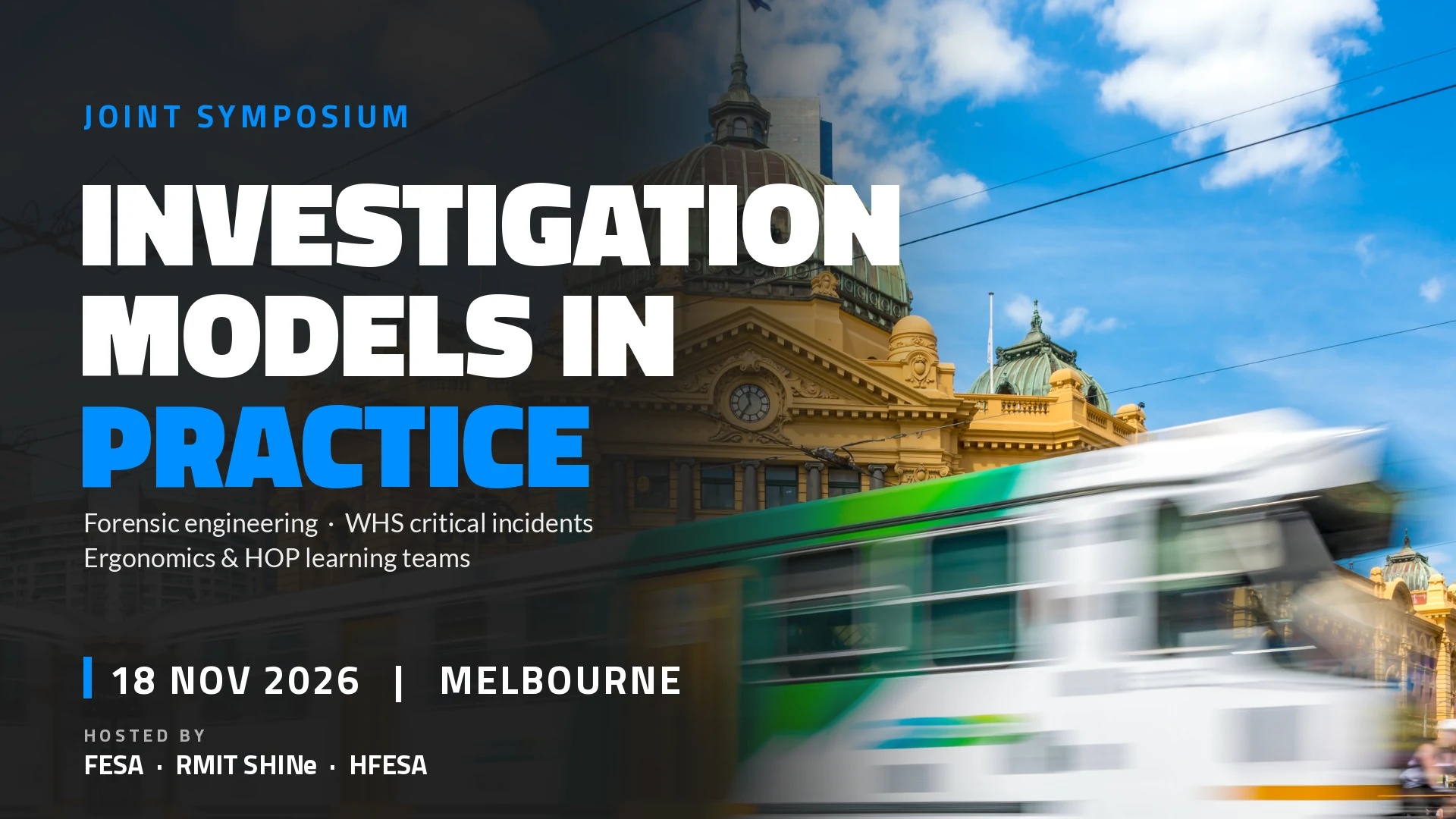
When a major incident occurs, where does reverse-engineering end and human performance begin?
The Forensic Engineering Society Australia (FESA) has partnered with the RMIT Safety and Health Innovation Network (SHINe) and the Human Factors & Ergonomics Society of Australia (HFESA) to host a free, interactive afternoon symposium at RMIT University in Melbourne.
The symposium compares traditional engineering and failure analysis models, including forensic reverse-engineering, Fault Tree Analysis, FMEA and Bowtie barrier models, with Human & Organisational Performance (HOP), Learning Teams, HFACS and task and interface ergonomics. Its starting point: no single investigation framework answers every complex, high-consequence incident.
The afternoon runs as fast-paced case studies, peer table discussions and a multidisciplinary panel debate on the strengths, limitations and blind spots of each approach. Presenters and panel members include Distinguished Professor Helen Lingard, Mark Dohrmann, Dr Andrew Short, Julie Gratton, Dr John Culvenor, Dr Len Cubitt, Professor Derek Viner, Dr Margarita Vargas, Kelvin Genn and Geoff Hurst.
Zeel Patel, Safety Innovation Consultant at PKG Safety Innovation™, will be attending to bring current practice from engineering, human factors and HOP investigation models into PKG's incident investigation work, including AI-assisted investigations.
Event: Joint Symposium: Investigation Models in Practice
Hosts: FESA, RMIT SHINe and HFESA
When: Wednesday 18 November 2026, 2:30pm to 6:30pm AEDT, followed by networking
Where: RMIT University City Campus, 124 La Trobe St, Melbourne
Cost: Free; optional $30 networking ticket