Most safety functions have spent the past decade getting very good at capturing ‘safety’ data. Incidents, audits, corrective actions, hazard reports. The registers are full, the dashboards are built, and the monthly pack goes out (usually) on time.
Ask a safety or operational leader what that data actually tells them about risk, though, and the answer is often: not much.
We believe the information that explains risk in a business isn’t safety data. It’s work data.
To understand risk, you have to understand work
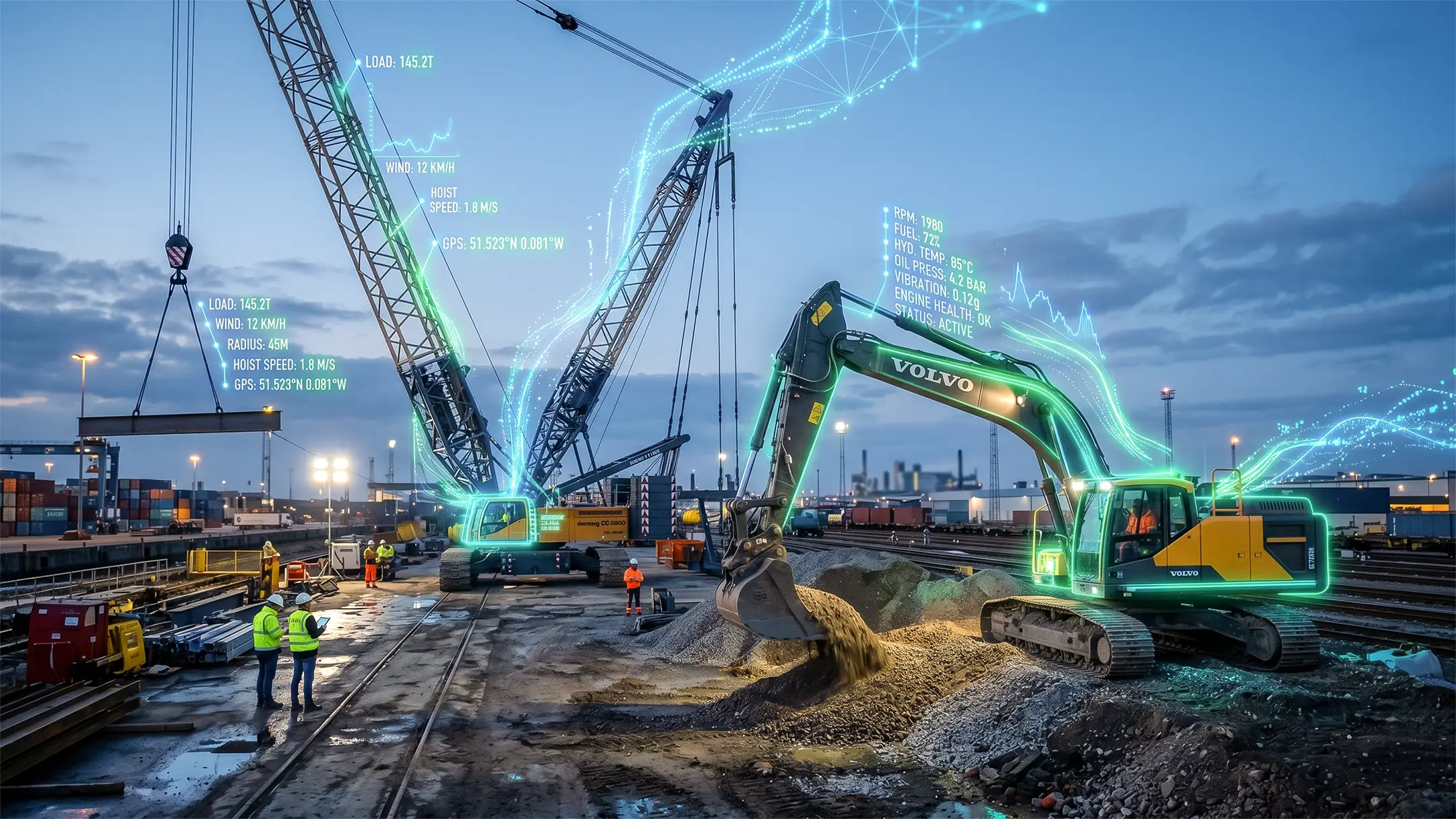
To understand risk, you must understand work. Picture a crew replacing a power pole: the condition and location of the asset, the people assigned to the job, where the material of the spare pole, the quality of the installation against specification, the hours worked, and the travel involved. People data, asset data, location data, quality data, all generated by a single task. That is work data, and it’s the kind of data that provides contextual understanding of dynamic risk.
Almost none of it lives in the safety system. Most of it the safety team doesn’t own and has never controlled. The data that would genuinely help you design safer work is captured and stored in the project management tool, the maintenance platform, the scheduling system, and HR software. Safety has rarely owned the pipeline that information flows through, which is precisely why “safety data” has stayed so narrow.
Asking better questions
Safety hasn’t always asked good questions about work data. Counting open actions from an audit or tallying how often “working at heights” appears across a month of hazard reports might look like insight. Mostly it’s noise. And because the absence of incidents isn’t the presence of safety, the questions worth asking need to shift beyond number-based metrics. We need to ask better questions about risk. There is, however, a chicken-and-egg to this. Sometimes you need data just to work out which questions are worth asking. But the discipline still starts with the question, not the tool.
Technology is closing the gap
Platforms like Snowflake and Databricks have changed what’s possible. Data from all an organisation’s disconnected systems can be modelled and pulled into a single layer, a data lake, where its original source software stops mattering as it becomes usable alongside everything else. The traditional pattern was someone exporting to a CSV and hand-building a Power BI dashboard at month’s end. The emerging pattern is querying that data directly in plain language, through the natural-language and agentic layers, both platforms are now building on top of it.
For most safety teams, the practical reality is unchanged: you won’t buy your own data platform. You’ll plug into the architecture your business has already invested in. So the capability worth building now is mostly human. Learning to articulate what you need to the data team. Designing capture that’s worth analysing and being clear about why you collect what you collect.
Better Work, By Design™ is our philosophy at PKG, and we believe you can’t design better work without work data.
Working out where safety fits in your organisation’s data architecture is a conversation we have often. If you’d like to have a conversation about the state of your data – book a discovery call.