
The 2026 Perth Safety Forum brings together leading voices from regulation, law, science and industry to explore the emerging risks shaping the future of workplace safety.
From psychosocial hazards and fatigue to AI, leadership accountability and evolving health considerations, this one-day forum will examine the critical issues extending beyond traditional compliance frameworks — and what safety professionals need to understand now to lead safer, more resilient workplaces.
Website: www.nscafoundation.org.au/eventdetails/39702/2026-perth-safety-forum
Date: 24 June 2026 - 8:30am to 4.30pm
Location: Maarli Mia Ballroom, Four Points by Sheraton Perth, 707 Wellington St, Perth
A Fireside Chat on AI in Safety: Notes from the NSCA Foundation Perth Safety Forum
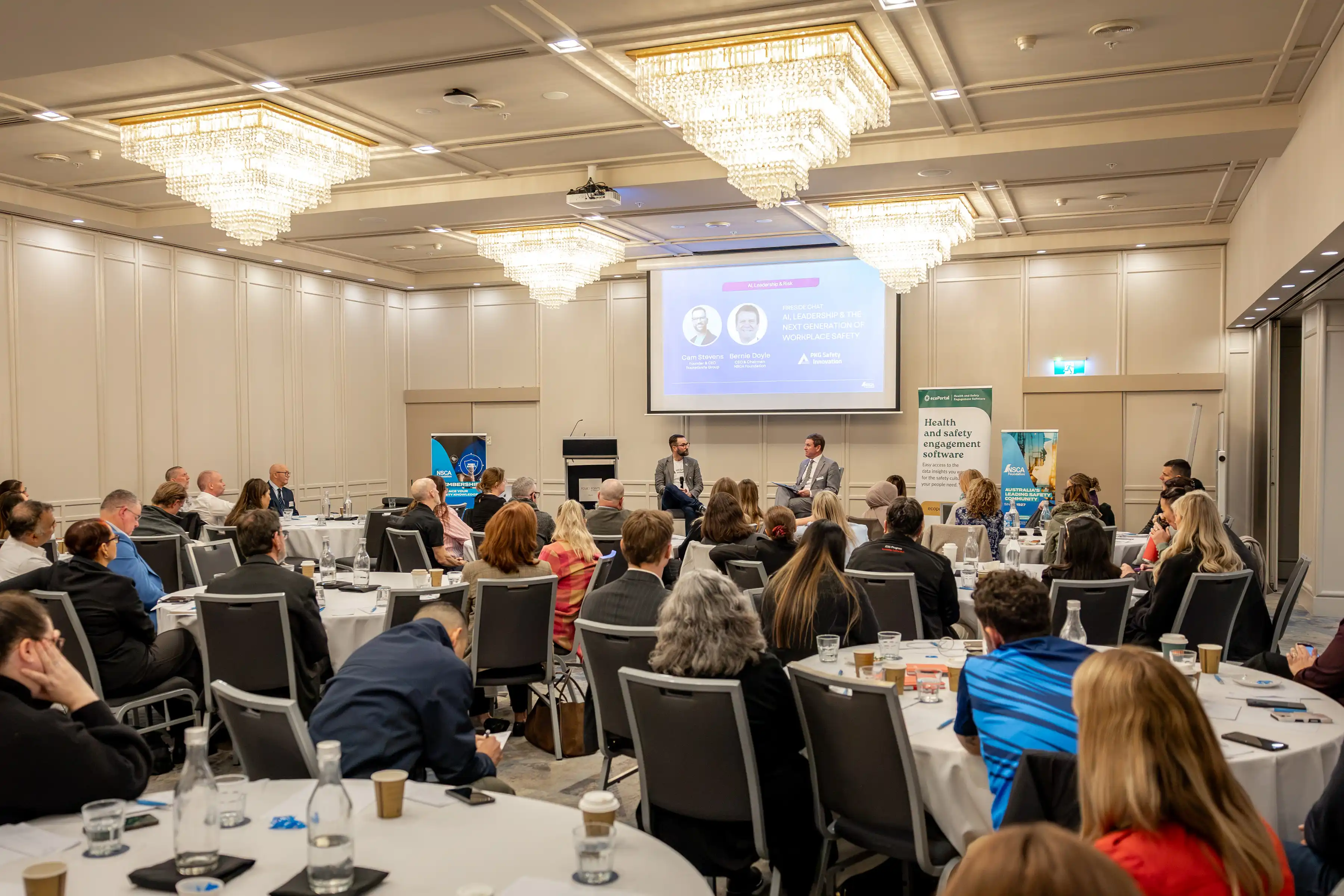
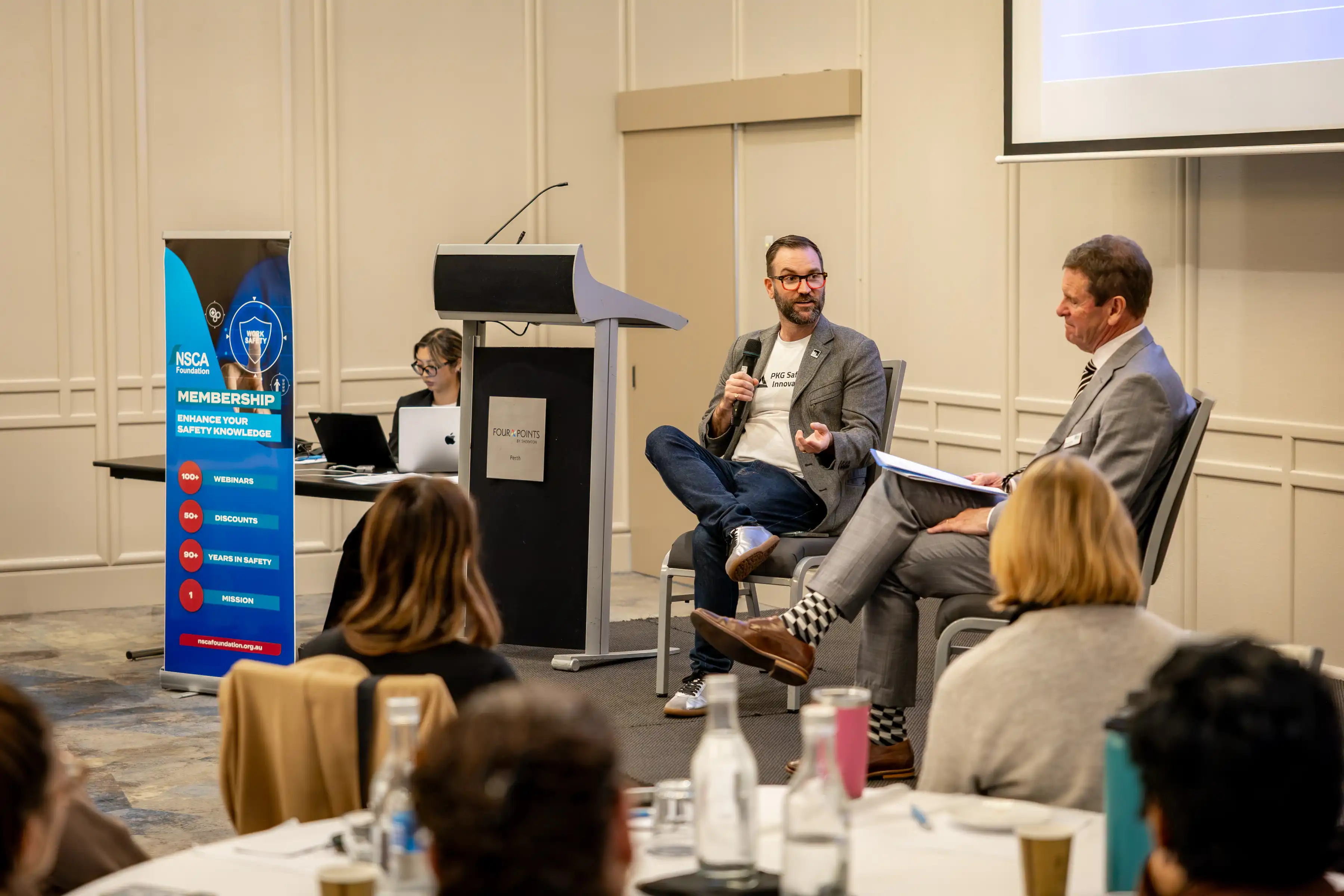
At the NSCA Foundation's Perth Safety Forum, Cam Stevens joined Bernie Doyle on stage for a fireside chat on artificial intelligence and the safety profession.
Bernie set the scene by reaching back well before software. He used aviation as his example: an industry that, more than a century on from the first powered flight, employs millions directly and indirectly and carries billions of people each year. The point was that a genuinely transformative technology tends to create far more work than it removes. He then told the room about a manufacturing plant he ran in Adelaide in the early 1990s, supplying metal seat frames to the automotive industry. Moving from rows of individual welders to a robotic welding cell took ten months of negotiation with the union, on a guarantee that nobody would lose their job. The plant became more competitive, started exporting, and ended up employing more people than before. It is a useful anchor for a conversation about AI, because the fear is old and the pattern is familiar.
AI is arriving whether we choose it or not
Cam's opening point was that adoption is not really a decision most practitioners get to make. The tooling is already in the systems they use every day.
Every single person that has Microsoft Outlook has Copilot, whether you like it or not. Generally speaking, AI will be integrated into the work that we do. But if you look at our health and safety processes, things like incident investigation, supporting risk assessment, leadership conversations, AI will find its way into those processes.
That is happening now. Cam noted that PKG is supporting organisations through AI-assisted investigation processes today, and the work is less about the technology than about being deliberate: identifying which aspects of a process are suitable for machines, and which are best kept human.
Lead with the problem, not the technology
The most common way Cam and the PKG team sees organisations get this wrong is to start from the tool. The pressure usually comes from the top.
Most of your C-suites are asking you how you're going to be using AI, and it's a bit of a detraction of your effort. It's a technology-led issue rather than a problem-led issue.
Cam's pushback is to turn the question around. The starting point should be the problem, not the acronym.
Why would we not be saying: we've got issues with understanding critical risk in real time, or our controls are changing dynamically; how could we understand that better? Then we could think that artificial intelligence might be an option.
Without that discipline, the profession risks being pulled along by the hype.
What I'm seeing right now is a wholesale shift to our professional community being forced to chase something that may not actually be worth chasing.
Curiosity still matters. Understanding a baseline of what these technologies can and cannot do is reasonable and necessary. Starting from "how can I use AI" when AI may not be the right answer is the trap.
Deciding what is for machines and what is for humans
Done responsibly, AI adoption forces a clarity that the profession has not always had about its own work.
We are identifying which aspects of the process are suitable for machines, and which parts are very much celebrated as human. If we do this responsibly, it actually means we are very clear about what is human and what is not.
To make that practical, Cam described three ways of partnering with AI in everyday practice: a thinking partner, for when you are not sure how to approach a task and need to reason it through as you would with a colleague; a learning partner, for going deeper on something like work design and cognitive load; and a building partner, for when you are actually constructing a procedure or a new workflow. The thread running through all three is that the practitioner stays in the loop.
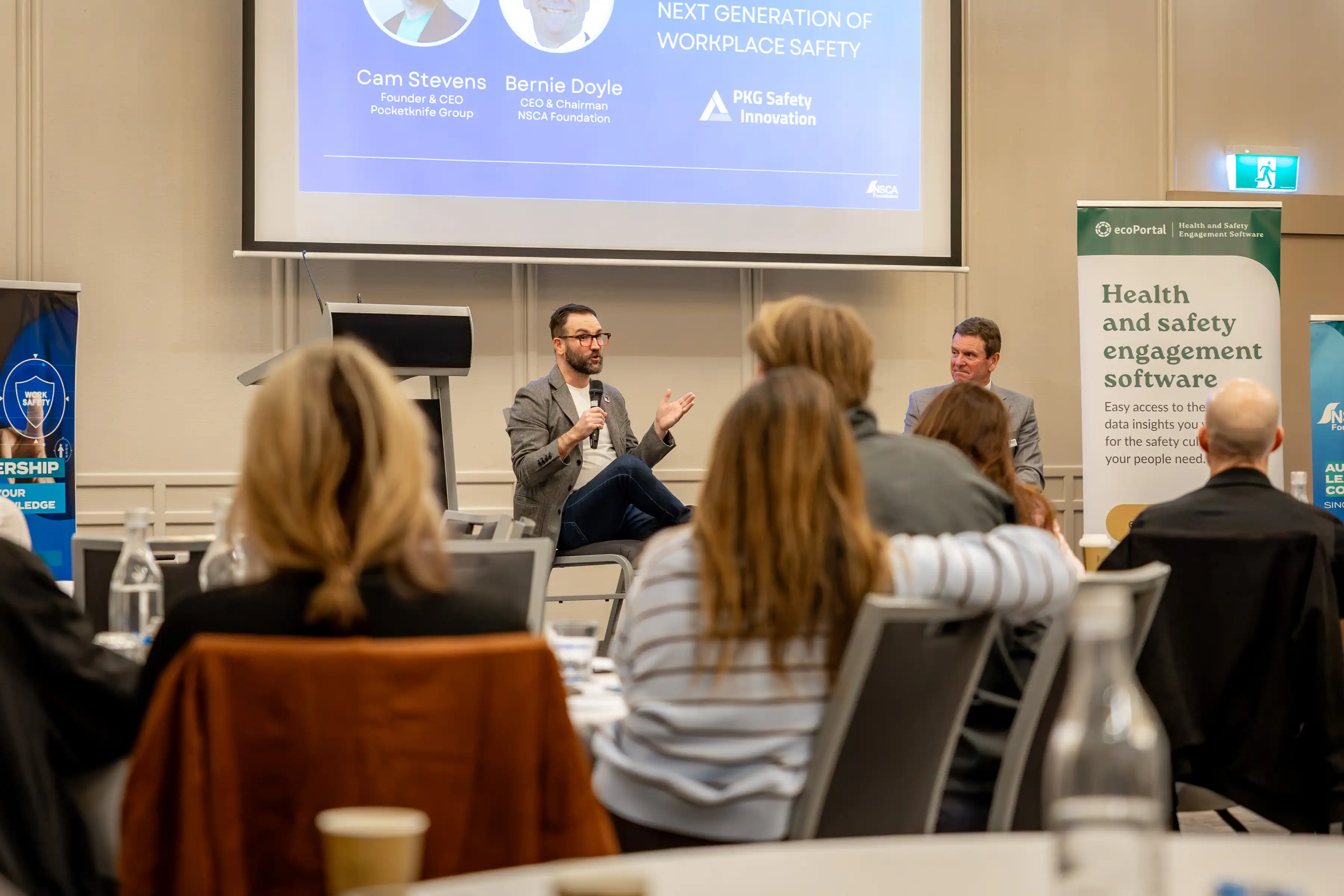
Cam was also candid about his own use. He uses these tools to reduce his cognitive load, and observed that the people who get the most from them tend to share a particular trait.
There's a particular type of person who can work with AI better than others: those who have more metacognition, the ability to think about thinking. Those who can critique their own work are more likely to work well with AI, because they can critique the AI.
Controls are what save lives
When the conversation turned to where AI actually earns its place in safety, Cam's answer was controls.
What we can use AI for is to increase the signal-to-noise ratio. Controls are what save lives. If we can use AI to understand controls better, and more importantly how controls change throughout work, that's the opportunity.
A lot of effort goes into controls before work starts, but controls degrade and interact as work unfolds, and the data that tells you so rarely sits in the safety system.
Most of the impact on controls is not in our safety system. It's in our SAP work order management systems, our training and records management systems, our maintenance programs. Humans just cannot make sense of that information in a timeframe that's useful for the worker.
That is the kind of disparate, time-critical sense-making where the technology genuinely helps a human make a better call.
Can AI take over the decision?
An audience member asked the question most people are wondering about: could you feed an event into AI and have it produce the report, the answer, and what to do next? Will that ever happen? Cam's response was unambiguous.
The machine should never make the decision. Whenever we deploy AI, there should be clear policy and guidance about how you own the output and what your role is as a practitioner in reviewing it before it goes anywhere.
Part of this is technical reality, not just principle. As Cam noted, most of what is being discussed is not deterministic.
We're mostly talking about large language models, which effectively predict the next word in the sentence. They're not designed to make decisions; they're there to augment human decision-making.
It is worth noting that the technology providers themselves are largely choosing not to take autonomous action in high-consequence settings, both because of litigation exposure and because a human needs to remain in those decisions.
Critical thinking and the math of safety
Another question used the calculator as an analogy: if we lean on the tool, do we stop learning how to solve the problem ourselves? It is a real anxiety, and one Cam hears constantly from safety professionals worried about losing their edge, particularly in something like an investigation. His answer was about how the profession brings people through.
We need to very deliberately curate learning pathways, and very deliberately get our new practitioners learning the math of safety, getting the battle scars.
The same question raised information overload, which connects to a point Cam makes with almost every client.
We capture a lot of information in the name of safety, and a large portion of it is absolute garbage. Artificial intelligence just amplifies the garbage we've already got in our systems. So most of what I do with clients has nothing to do with AI. We're cleaning up the house.
Getting the data foundations right, and being clear about what data you actually need to understand control performance, is the unglamorous work that has to come first.
An emerging tool we still have to learn
A practitioner who had returned to study made the point that AI is an emerging tool, and that we need to learn to use it well rather than simply decide whether to allow it. Their course actively encourages students to use AI, on the condition that they show how they used it, what they put in, and what came out. Cam's view was that this approach is exactly right.
I'd rather you used it and told me how you used it and what your thoughts are about the output, rather than just saying no, you can't.
Learning to use it well depends on being properly enabled in the first place, and many people are not.
If you have a basic Microsoft Copilot licence and don't have M365 Premium, you are not enabled with AI in your business.
The genuinely premium licences cost real money at scale, which is why so much of Cam's time goes into helping clients build the business case. To help practitioners see where they sit, PKG built a simple tool.
On our website we have a tool called the Safety AIQ. It tests two things: your organisational access, and your individual access.
The reason for testing both is that the relationship between them is what determines whether AI helps or harms.
The gap between your organisation's ability to provide the tools, the governance and the guardrails, and your own curiosity and experimentation, is what matters most. You can both be early and immature, and move together. The trouble starts when one moves and the other does not.
The divide already forming
Cam closed on something he is seeing take shape across the profession. People are sorting into a handful of personas: those who are curious but do not know where to start and need someone to guide them; those who tried the early chatbots, found them frustrating, and gave up; those near the end of their careers who have decided it is someone else's problem; and those who are already building their own tools at home and feel held back by what their organisation provides.
The last group is where the risk is sharpest. In an enablement session the day before the forum, one participant put it plainly: they had paid for their own licences so they would not be left behind, because they felt their professional career was being damaged by not being able to move at the pace they needed to stay competitive. When practitioners are funding their own capability to keep up, that is a signal worth taking seriously.
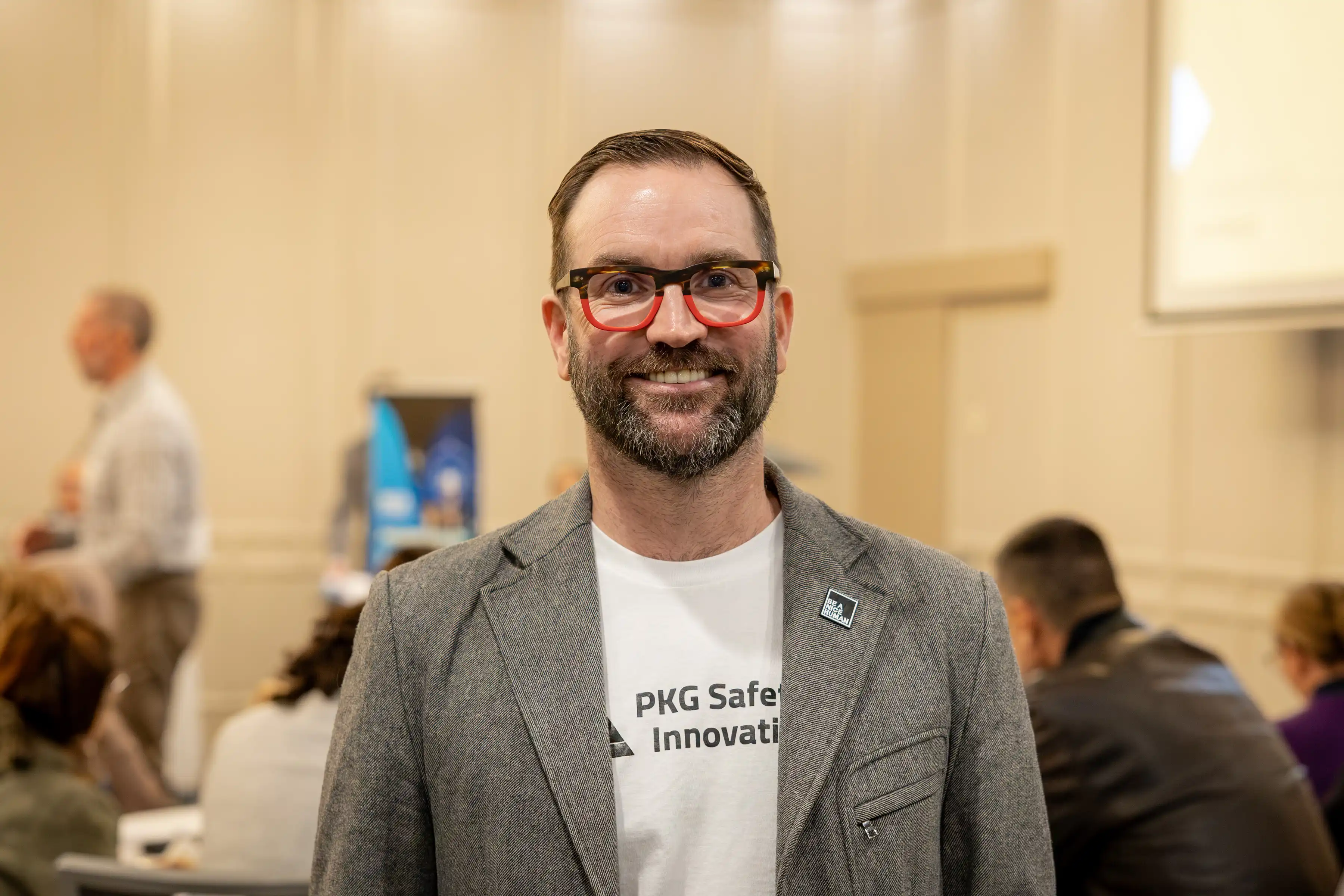
None of this is really about the technology. The fear that came up first, that AI will take the job, is an old fear wearing new clothes, and the work in front of us is the same work it has always been: designing the system around the people who do it. That is what PKG means by Better Work, By Design™.
If you want to see where you and your organisation sit on that divide, the SafetyAIQ on our website is a useful place to start. And if you are working through how to enable AI responsibly in your work. Book a discovery call.